

PRACTICE AREAS
PRODUCTS LIABILITYS - FRONTAL AIR BAGS
|
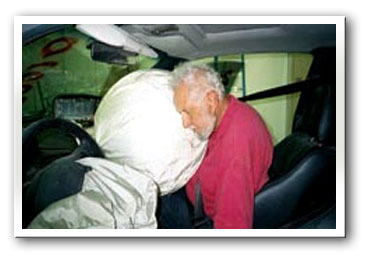
Well designed airbags have been highly effective in reducing fatalities from frontal crashes. Indeed, frontal airbags reduce driver fatalities by 29% and fatalities of front-seat passengers age 13 and older by 30%. NHTSA estimates that the combination of an airbag plus a lap and shoulder belt reduces the risk of death by 51%, compared to a 45% reduction for belts alone in frontal crashes. As of 2013, an estimated 39,886 lives have been saved by frontal airbags. FRONTAL AIRBAG THRESHOLDSAirbag injuries are frequently caused by the airbag deploying in the crash when it should not have. Airbag systems are controlled principally by design thresholds which dictate when and under what circumstances the bags are to deploy. Frontal airbags are designed to only deploy in frontal crashes, not side impacts, rear impacts, or rollovers. First Generation frontal airbags were designed to never deploy at speeds generally below six-and-a-half miles per hour, the so-called “no-fire threshold,” and to always deploy at speeds generally above 13 miles per hour, the so-called “must-fire threshold.” The gray zone, the difference between the no-fire and must-fire thresholds, was built into the system to allow variability. As a result of the airbag thresholds and variability of the manufacturing and quality control, airbags frequently deploy in crashes when they should not have, thereby needlessly causing injuries. LATE DEPLOYMENTAirbags frequently cause injuries because they deploy late. Manufacturers have known for at least 25 years that the airbag must be fully inflated before there is an interaction between it and the occupant. However, because of sensor designs, location of sensors, and the wiring system utilized by manufacturers, airbags often do not deploy in a timely manner. As a result, the airbag partially inflates into the occupant, causing inflation-induced injuries. AGGRESSIVE AIRBAGSAirbag systems have been causing inflation-induced injuries because they are overly aggressive. First Generation airbags were deploying with great velocity because they were principally intended to minimize serious injuries and deaths in high-speed collisions. But since the bags were also deploying in relatively minor crashes, the force of inflating the bag was causing injuries that would not have otherwise occurred. As a result, single-stage inflators were replaced with dual and/or two-stage inflators, or depowered inflators, which typically deployed with less force. Serious injuries and death in low-speed accidents have been greatly minimized by Second and Third Generation airbags utilizing these less forceful designs. WIRING/CONNECTOR FAILURESIncreasingly, airbag wiring and connector failures prevent airbags from deploying properly when needed. These defects are the result of connector designs that allow faulty connections, and manufacturing defects in wiring harnesses that have resulted in several recalls. NON-DEPLOYMENTSFinally, an increasing number of injuries are occurring from the non-deployment of the airbag when it should have deployed. Manufacturers have attempted to cut costs associated with their airbag systems by reducing the quality and quantity of sensors. As a result, airbags do not always deploy in crashes like they should, and preventable injuries and deaths occur.
|